Now Reading: Writesonic vs Rytr (2026): Which AI Writer is Worth Your Money?
-
01
Writesonic vs Rytr (2026): Which AI Writer is Worth Your Money?
Writesonic vs Rytr (2026): Which AI Writer is Worth Your Money?

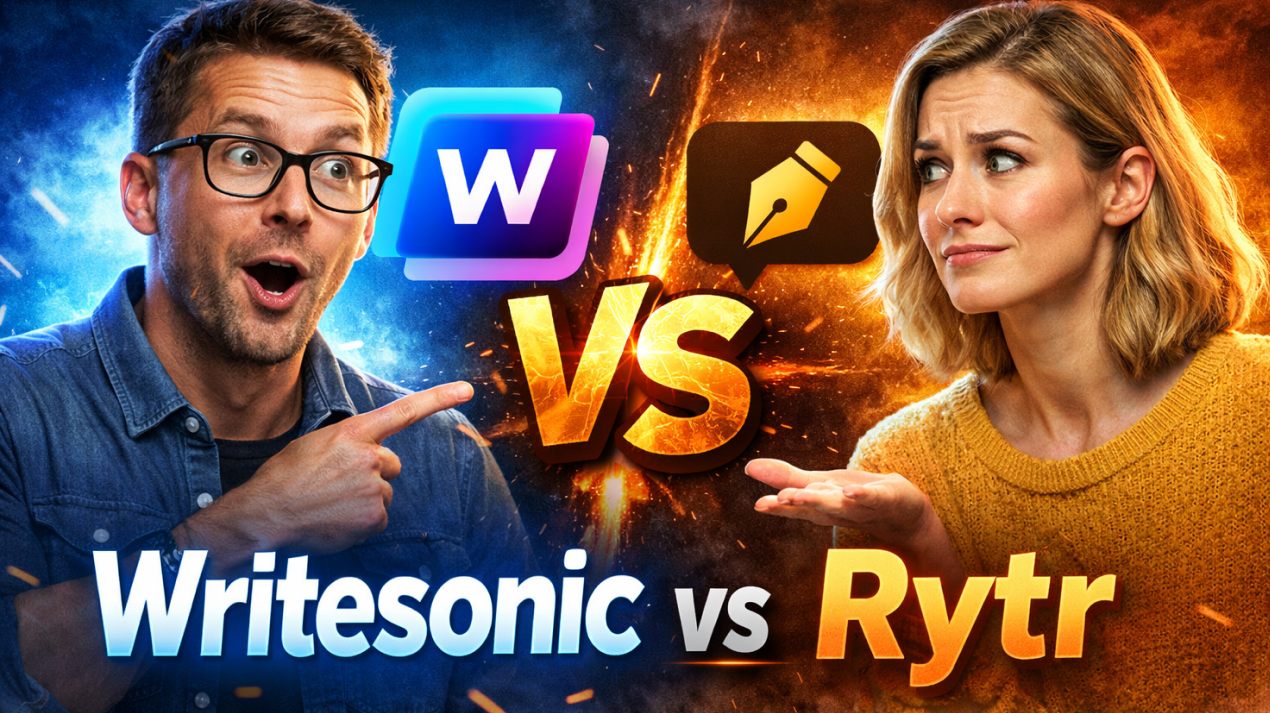
In 2026, it is quite clear that choosing the right AI writing tool can make a huge difference in your content workflow and overall marketing results. For that purpose, two popular options that are dominating the AI writing space are Writesonic and Rytr. Both tools promise fast content generation, improved creativity, and support for multiple writing use cases, including blog posts, ads, emails, and social media content. However, both are different in features, output quality, and ideal user base. Understanding these differences is important for you to choose the right tool.
That is the purpose of this guide. Today, I’ll tell you everything about Writesonic and Rytr, along with their pros and cons, so that you can get a better view of which tool can best support your needs as a writer.
What is Writesonic?
In simple terms, Writesonic is an AI-powered content creation platform that is designed to help you generate high-quality content quickly. It uses advanced language models to create blog posts, landing pages, product descriptions, ads, and social media content. The platform is particularly popular among marketers and SEO professionals who need scalable content production.
One of Writesonic’s biggest strengths is its wide range of tools, including long-form article generation, AI chat assistance, and SEO-focused writing features. Not only that, but it can also integrate with real-time data in some modes, which can be key for you to produce more relevant and up-to-date content.

What is Rytr?
Rytr is an AI writing assistant that is designed to simplify content creation for everyone. It can help you generate different types of content, including blog outlines, emails, ads, social media captions, and short-form marketing copy. The platform is specifically known for its affordability and simplicity, which makes it accessible to beginners.
Unlike some advanced AI writing tools, Rytr focuses on providing simple content generation without overwhelming you with complex features. It offers multiple tone options, language support, and writing templates that can help you produce content quickly. All of this makes it particularly useful for those who need short-form content on a regular basis.

You may also like: Jasper vs Copy.ai vs Writesonic – Full in-depth Comparison
Top Features & Benefits of Writesonic
Advanced Long-Form Content Generation
Writesonic works best at generating long-form content like blog posts, guides, and articles. With it, you can input a topic, keywords, or a brief description, and the tool produces content with headings and paragraphs. This can significantly reduce your research and drafting time.
At the same time, the long-form editor also allows you to refine certain sections, expand ideas, and maintain consistency throughout the article. For those managing multiple clients, this feature can be key for improving productivity as it ensures faster turnaround.
Built-in SEO Optimization Tools
Writesonic includes SEO-focused features to help you create content perfectly optimized for search engines. It provides keyword guidance, headings, and content suggestions that can improve user readability and ranking potential. These tools are particularly helpful for marketers who want to produce SEO optimized articles without switching between multiple platforms.
By integrating SEO features directly into the writing process, Writesonic significantly reduces the need for additional optimization tools. This saves time and ensures consistency in content strategy.
Wide Range of Content Templates
Writesonic offers a large library of content templates for different content needs, including ads, landing pages, product descriptions, and emails. These templates allow you to generate targeted content quickly without starting from scratch.
Each template is designed with a specific goal, like conversions, engagement, or brand awareness. This flexibility makes Writesonic suitable for those who are handling multiple campaigns. Instead of manually brainstorming formats, you can simply rely on pre-built structures.
This can speed up your workflow and help you maintain consistency across content types.
AI Chat and Conversational Writing Assistance
Writesonic includes AI chat capabilities to help you brainstorm ideas, refine content, and generate responses. This conversational feature acts like a writing assistant, allowing you to ask questions, request revisions, or expand sections. It’s especially useful during research and ideation stages.
Because of that, you can now interact directly within the platform instead of switching tools. This improves efficiency and helps you overcome writer’s block. The chat functionality also supports quick adjustments to tone, structure, and messaging.
Real-Time Content Generation Speed
Writesonic is designed for speed, allowing you to generate content in seconds. This fast turnaround is ideal for those working with tight deadlines. The tool also processes inputs quickly and produces structured outputs without long waiting times.
In Writesonic, speed does not come at the cost of usability, as you can still edit and refine content easily. This balance between quick generation and customization can improve your productivity.
Related article: Writesonic Alternatives for SEO Content Writing
Top Features & Benefits of Rytr
Affordable AI Writing for Beginners
Rytr stands out for its budget-friendly pricing, which makes AI writing accessible to freelancers and small businesses. With it, you can start generating content without committing to expensive plans. This affordability makes it attractive for those who are testing AI writing tools for the first time.
Despite its lower cost, Rytr still offers essential features that are required for everyday content creation. It supports multiple templates and tone options, allowing you to customize outputs with ease.
Simple and Easy-to-Use Interface
Rytr is designed with simplicity in mind. That’s why its interface is clean and beginner-friendly. As a starter, you only need to choose a template, enter input details, and generate content. This ease of use reduces the learning curve, especially for non-technical users.
Small business owners and freelancers can quickly adapt it without spending time exploring complex features. The streamlined layout ensures that you focus on writing rather than navigating the platform. This simplicity also improves workflow efficiency.
Multiple Tone and Language Options
Rytr allows you to select from various tones, such as professional, casual, persuasive, or friendly. This flexibility allows you to tailor your content to different audiences and platforms. Whether writing marketing copy or social media posts, you can always adjust the tone accordingly.
Additionally, Rytr also supports multiple languages, which makes it useful for global users. This multilingual capability can also help you create content for diverse markets. While on the other side, the tone customization ensures to generate text that can perfectly align with your brand voice.
Quick Short-Form Content Creation
Rytr performs particularly well when generating short-form content like ads, captions, and emails. You can create concise content within seconds, which makes it ideal for fast-paced marketing tasks. This feature is beneficial for social media managers and small teams.
Instead of manually drafting short pieces, you can rely on Rytr for quick ideas. The outputs are usually structured and ready for light editing, which helps reduce time spent on repetitive writing tasks.
Built-in Content Editing and Improvement Tools
Rytr includes editing features that can help you refine generated content. With it, you can expand, shorten, rephrase, or improve your text directly within the platform. These tools allow quick adjustments without needing external editors.
This, as a whole, improves workflow and keeps everything centralized. The editing capabilities also help you enhance clarity and readability. Users can experiment with variations to find the best version. For beginners, these built-in tools make content polishing easier.
People Also Like: Best AI Writing Tools for Bloggers in 2026
Pros and Cons of Writesonic
Pros
Powerful long-form content generation: Writesonic excels at producing structured long-form articles, which can save hours of manual writing. It can also help you scale content production while maintaining consistency and readability across projects.
Wide range of content templates: The platform offers numerous templates for ads, blogs, landing pages, and emails. This flexibility allows you to create different content types quickly without switching tools or manually formatting structures.
Built-in SEO-focused writing features: Writesonic integrates SEO guidance into the writing process. With it, you can structure your headings, optimize readability, and create search-friendly content without relying on additional optimization tools.
Fast content generation speed: Writesonic can generate content within seconds, helping you to meet tight deadlines with ease. This speed can improve productivity, especially for those handling multiple clients and requiring consistent content output.
AI chat and brainstorming support: The AI chat feature can help you brainstorm ideas, refine drafts, and overcome writer’s block. This interactive assistance can improve creativity and simplify the overall content creation process.
Cons
Pricing may be higher for beginners: Writesonic’s advanced features come with higher pricing tiers. That’s why beginners and those with limited budgets may find it less affordable compared to Rytr.
Output may require manual editing: Although Writesonic generates structured content, some outputs still require editing for accuracy, tone, and clarity.
Interface can feel feature-heavy: The platform includes many tools and options, which may overwhelm new users. That’s why beginners might need time to explore features and understand workflows before using Writesonic efficiently.
Credit-based usage limitations: Certain plans use credit-based limits for content generation. That’s where heavy users may exhaust their credits quickly, requiring upgrades or careful usage planning for consistent content production.
Not ideal for very short content tasks: While Writesonic handles long-form content well, it might not be ideal for quick short-form tasks, where simpler tools like Rytr might offer faster and better results.
You may also like: Grammarly Review: Features, Pricing & Pros and Cons
Pros and Cons of Rytr
Pros
Budget-friendly pricing structure: Rytr is affordable compared to many AI writing tools. It allows freelancers, small businesses, and complete beginners to access AI content generation without committing to expensive monthly subscriptions.
Simple and beginner-friendly interface: The clean interface makes Rytr easy to use. With it, you can generate content quickly without navigating complex dashboards, which makes it suitable for non-technical individuals and small teams.
Multiple tone options available: Rytr offers different tone settings, allowing you to tailor your content for various audiences. This flexibility can help you maintain brand voice across social media, marketing copy, and other content.
Good for short-form content creation: Rytr performs well when generating short content like captions, emails, and ads. It saves time for marketers who need quick copy.
Supports multiple languages: The tool provides multilingual support, helping you create content for different regions. This makes Rytr useful for those who are targeting diverse audiences.
Cons
Limited long-form content capabilities: Rytr is less effective for generating detailed long-form articles. You may need to manually structure and expand that content, which makes it less suitable for large blog production workflows.
Fewer advanced SEO features: Unlike Writesonic, Rytr lacks built-in SEO optimization tools. For that reason, you’ll often need external platforms for keyword optimization and content analysis.
Output quality can vary: Generated content may sometimes lack depth or accuracy. That’s why you must review and edit its outputs carefully to maintain quality and relevance.
Limited advanced integrations: Rytr offers fewer integrations compared to more advanced AI platforms. This can restrict workflow automation for agencies and businesses who are managing multiple tools.
Not ideal for complex content needs: For technical and highly detailed writing tasks, Rytr may not provide sufficient depth. You might require additional editing or alternative tools for advanced content requirements.
Writesonic vs Rytr: Which is Better?
Choosing between Writesonic and Rytr depends on your content goals, budget, and workflow needs. Ideally, Writesonic is better suited for those who require advanced features, long-form content generation, and built-in SEO capabilities. At the same time, it offers more flexibility, templates, and scalability for large content projects.
On the other hand, Rytr is ideal for those looking for an affordable and easy-to-use AI writer. It performs well for short-form content like social media captions, emails, and ad copy. However, it lacks some of the advanced capabilities found in Writesonic.
If you need comprehensive content creation and SEO-friendly outputs, Writesonic is the stronger choice. But if your focus is on budget-friendly, quick content generation, Rytr delivers solid value.
FAQ’s
- Which is better for beginners, Writesonic or Rytr?
Rytr is generally better for beginners because of its simple interface and affordable pricing.
- Is Writesonic good for SEO content?
Yes, Writesonic includes SEO-focused features that can help you create SEO friendly content.
- Can Rytr generate long-form articles?
While Rytr can generate long-form content, it is usually not recommended to use it for long-form content creation.
- Which tool is more affordable?
Rytr is typically more budget-friendly.
- Should agencies choose Writesonic or Rytr?
Agencies usually benefit more from Writesonic because of its advanced features and ability to handle large content production workflows.