Now Reading: DALL-E vs. Stable Diffusion: Which AI Image Generator is Best?
-
01
DALL-E vs. Stable Diffusion: Which AI Image Generator is Best?
DALL-E vs. Stable Diffusion: Which AI Image Generator is Best?

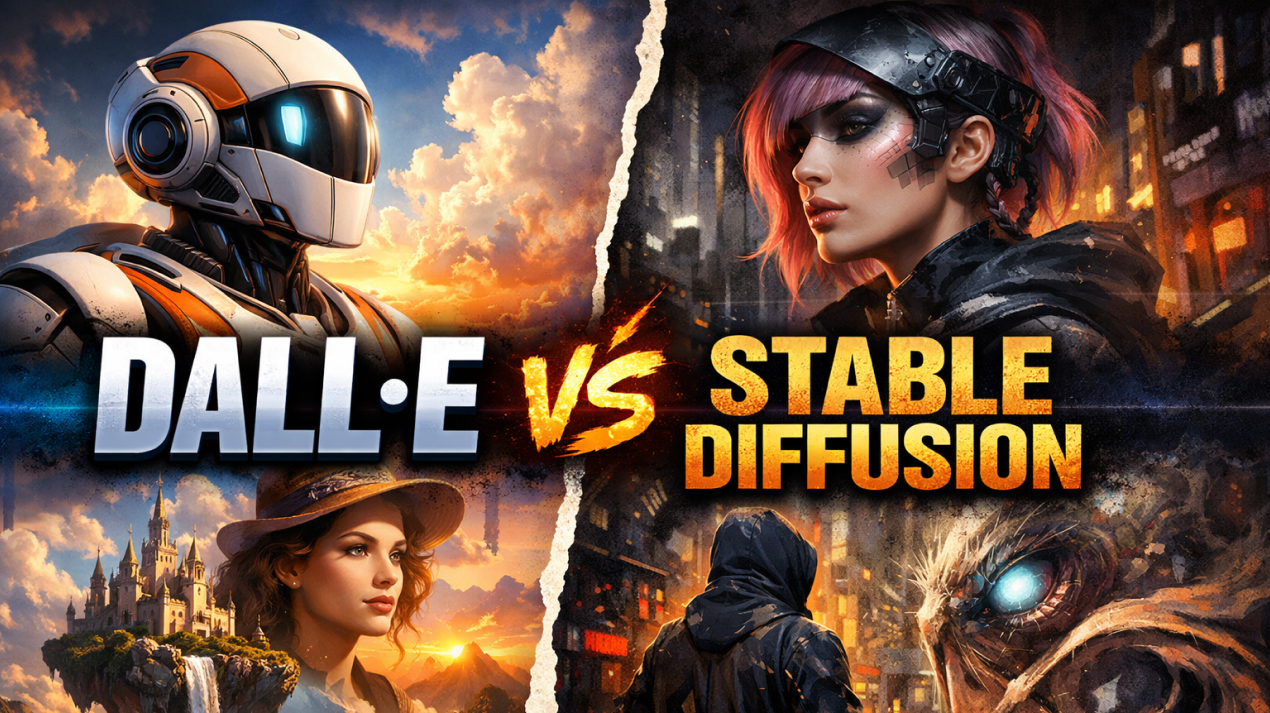
AI image generators have transformed how we all produce visuals, as they have made it easier for everyone to turn simple text prompts into professional-quality images within seconds. That’s why in the very category, you’ll see hundreds of tools. Among them, two of the most popular options that are dominating this space are DALL-E and Stable Diffusion.
Both platforms use advanced machine learning models to generate artwork, illustrations, marketing visuals, and conceptual designs, yet they differ significantly in flexibility and control, and understanding these differences is essential for you to choose the right tool.
That’s why in this guide, I’ll share with you everything you need to know about DALL-E and Stable Diffusion.
What is DALL-E
In simple words, DALL-E is an advanced AI image generation tool that is developed by OpenAI that converts text prompts into high-quality visuals. It is designed for simplicity, which makes it accessible to everyone who wants quick visuals without a technical setup.
With it, you can simply describe what you want, and the tool produces realistic images, illustrations, or artistic compositions. DALL-E is known for generating clean, polished outputs that require minimal editing, which makes it popular for blog graphics, presentations, and marketing campaigns.
Another key strength is its integration with modern creative workflows, which allows you to edit images, expand backgrounds, and refine visuals directly within the platform.
Related article: Midjourney vs DALL·E: Best AI Image Generator?
What is Stable Diffusion
Stable Diffusion is an open-source AI image generator that allows you to create images from text prompts with extensive customization and control. Unlike cloud-based tools, it can run locally on your computer, giving you more flexibility.
This model is popular among designers, artists, and programmers who want to fine-tune outputs using custom settings, models, and extensions. Stable Diffusion also supports various creative styles, from photorealistic images to anime, concept art, and experimental visuals.
Because it is open-source, you can simply modify the model, integrate plugins, and build tailored workflows for specific projects. Another major advantage is cost efficiency, as generating images locally eliminates subscription fees.
However, it may require technical knowledge and a capable GPU for smooth performance.

Top Features & Benefits of DALL-E
Easy-to-Use Interface for Beginners
One of DALL-E’s biggest advantages is its simple and intuitive interface, which makes AI image generation accessible to everyone. You can type a prompt and receive polished images without dealing with technical settings. This ease of use is highly appreciated by marketers, bloggers, and business owners who need quick visuals.
The tool also includes built-in editing capabilities, allowing you to refine parts of an image, expand backgrounds, or adjust details effortlessly. Because everything runs in the browser, there is no installation required.
High-Quality and Polished Image Outputs
DALL-E is widely recognized for producing clean, visually appealing images that often require minimal post-editing. Its AI model is trained to generate balanced compositions, realistic lighting, and accurate object placement, which makes it ideal for marketing visuals, blog graphics, product mockups, and presentations.
You benefit from consistent quality across different prompts, which reduces the need for repeated generations. The tool also handles complex prompts effectively, combining multiple elements into cohesive visuals. Because outputs are ready-to-use, you, as a creator, can quickly integrate images into campaigns.
Built-in Image Editing and Expansion Tools
DALL-E offers powerful editing features that enhance flexibility after generating an image. With it, you can modify specific areas, remove unwanted elements, or extend the canvas to create larger compositions. This functionality is especially useful for social media banners, blog headers, and ad creatives.
Instead of starting from scratch, you can refine images directly within the tool. The outpainting feature allows seamless background expansion, maintaining style and lighting consistency.
These capabilities also reduce reliance on external editing software. By combining generation and editing in one platform, DALL-E simplifies workflows and improves productivity.
Strong Prompt Understanding and Accuracy
Another key strength of DALL-E is its ability to interpret prompts accurately and generate relevant visuals. Its model understands descriptive language, artistic styles, and contextual details effectively. This means you can include specific instructions such as lighting, camera angle, mood, or color palette.
The tool translates these instructions into cohesive images with fewer errors. This accuracy reduces the time you spend refining prompts repeatedly. Marketers and designers benefit by quickly producing visuals aligned with brand requirements.
The improved prompt understanding also supports creative experimentation as you can test multiple ideas rapidly while maintaining consistency in results.
Cloud-Based Convenience and Fast Generation
Because DALL-E operates entirely in the cloud, you do not need powerful hardware to generate images. This makes it accessible to anyone with an internet connection. The platform processes prompts quickly, delivering results within seconds.
This speed is valuable for teams working on tight deadlines. Additionally, cloud-based access allows you to work from different devices without installation.
The system automatically manages updates and improvements, ensuring you always access the latest features. This convenience simplifies workflows and reduces technical barriers.
You may also like: Midjourney vs Leonardo AI for Image Generation
Top Features & Benefits of Stable Diffusion
Open-Source Flexibility and Customization
Stable Diffusion’s open-source nature allows you to modify and customize the model extensively. Because of that, you can adjust parameters, install extensions, and train custom models. This flexibility enables unique workflows tailored to your specific creative needs.
With it, you can experiment with styles and can build brand-focused outputs. Because the tool supports community-driven enhancements, new features kept appearing frequently. This adaptability makes Stable Diffusion highly versatile.
On top of that, those who want full control over image generation benefit significantly. Instead of relying on fixed settings, they can fine-tune details. This level of customization is ideal for advanced users who are seeking precise and personalized results.
Local Installation and Offline Capability
Stable Diffusion can run locally on a computer, which offers greater control and privacy. You can generate images without uploading your data to external servers. This is particularly beneficial for businesses that are handling sensitive visual concepts.
Local execution also eliminates dependency on the internet speed. Once installed, you can even work offline. This capability improves reliability and consistency. Additionally, generating images locally can reduce long-term costs. You only need suitable hardware instead of recurring subscriptions.
Extensive Style Variety and Creative Freedom
Stable Diffusion supports a wide range of artistic styles, including photorealism, anime, concept art, and experimental visuals. You can download specialized models to achieve specific aesthetics. This versatility enables you to explore diverse design directions.
The tool also allows control over parameters such as sampling methods, steps, and guidance scale. These options can help you refine outputs precisely. On top of that, because of the community-driven model sharing, new styles are constantly available, which makes Stable Diffusion an excellent choice for professionals.
Cost Efficiency and No Mandatory Subscription
One of Stable Diffusion’s biggest benefits is cost efficiency. Since it can run locally, you do not need ongoing subscription fees. After initial setup, you can generate unlimited images. This is particularly helpful for freelancers and startups that are operating on a limited budget.
Additionally, open-source availability also allows you to access the model without licensing restrictions. The absence of mandatory subscriptions makes Stable Diffusion attractive for long-term use.
Strong Community Support and Continuous Improvements
Stable Diffusion benefits from an active global community that continuously develops new tools, plugins, and models. You can access tutorials, shared workflows, and downloadable resources. This collaborative ecosystem accelerates learning and experimentation.
Developers regularly release updates that enhance performance and capabilities. The availability of community support also helps beginners to overcome technical challenges. Because improvements come from multiple contributors, innovation happens rapidly.
Pros and Cons of DALL-E
Pros
User-Friendly and Beginner Accessible: DALL-E offers a simple interface requiring minimal learning. You can generate high-quality visuals using simple prompts. This accessibility makes it ideal for marketers, bloggers, and businesses needing fast results without technical complexity.
High-Quality Consistent Outputs: The tool consistently produces polished images with balanced composition and lighting. This reliability reduces editing time, as professionals benefit from ready-to-use visuals suitable for blogs, ads, and presentations.
Built-in Editing Capabilities: DALL-E includes in-platform editing features like image expansion and object refinement. You can adjust visuals without external software. This integrated workflow improves productivity and simplifies creative processes significantly.
Cloud-Based Convenience: Because DALL-E runs online, you do not need powerful hardware. This accessibility allows you to work from any device.
Fast Image Generation Speed: DALL-E delivers results quickly, helping you meet deadlines. Rapid generation supports experimentation with multiple concepts.
Cons
Limited Customization Options: Compared to open-source tools, DALL-E offers fewer advanced controls, as you cannot fine-tune models deeply. This limitation may restrict professionals who require precise technical customization.
Subscription or Credit-Based Usage: DALL-E often operates on credits or subscriptions. Frequent usage may increase costs, and businesses that are generating large volumes of images might find expenses higher over time.
Requires Internet Connection: Since DALL-E is cloud-based, it needs a stable internet connection. Offline usage is not possible. This dependency can affect workflows in limited connectivity environments.
Less Flexibility for Developers: Developers may find DALL-E restrictive for building custom pipelines. Limited access to model internals reduces experimentation. Advanced users might prefer more open systems.
Content Policy Restrictions: DALL-E follows strict safety guidelines, which means certain prompts may be blocked or modified. While beneficial for safety, this can limit creative freedom for experimental projects.
Pros and Cons of Stable Diffusion
Pros
Open-Source and Highly Customizable: Stable Diffusion allows deep customization. With it, you can adjust parameters, install extensions, and train custom models. This flexibility supports unique workflows tailored to creative or business needs.
Local Installation Capability: You can run Stable Diffusion locally, all while maintaining privacy, and your sensitive data remains secure. Offline generation also improves reliability for those working without consistent internet access.
No Mandatory Subscription Costs: After setup, you can generate unlimited images without recurring fees. This cost efficiency benefits freelancers, startups, and businesses producing high volumes of visuals regularly.
Extensive Style Options: Stable Diffusion supports multiple artistic styles. You can download models for anime, photorealistic, or conceptual art. This versatility enhances creative experimentation.
Strong Community Ecosystem: An active community shares models, tutorials, and updates. Continuous innovation improves capabilities. You can benefit greatly from frequent enhancements and collaborative support.
Cons
Requires Technical Knowledge: Setting up Stable Diffusion can be complex, as you may need command-line skills and GPU configuration. That’s why beginners might find the learning curve challenging initially.
Hardware Requirements: Local generation often requires a powerful GPU. That’s why those without capable hardware may experience slow performance, which can limit accessibility.
Inconsistent Output Quality: Results may vary depending on settings and models. And to get the best result, you’ll often need experimentation. This inconsistency increases the time you might spend on refining outputs.
No Built-in Standard Interface: Unlike cloud tools, Stable Diffusion interfaces depend on installations. Different setups may vary, which can create usability challenges.
Maintenance and Updates Needed: You must manually update models and extensions. This maintenance requires effort, and non-technical users may find ongoing management inconvenient.
DALL-E vs Stable Diffusion: Which is Better?
Choosing between DALL-E and Stable Diffusion depends on your needs, experience level, and workflow. DALL-E is better for beginners, marketers, and businesses that are in need of quick, polished images without technical setup. Its cloud-based convenience, strong prompt understanding, and built-in editing tools make it ideal for fast-paced content creation.
On the other hand, Stable Diffusion excels in flexibility and customization. Developers, designers, and advanced users benefit from its open-source nature, local installation, and unlimited generation capabilities. It allows deeper control but requires technical knowledge and capable hardware.
If you prioritize ease of use and consistent quality, DALL-E is the better choice. If you want creative freedom, lower long-term costs, and advanced customization, Stable Diffusion stands out.
FAQ’s
- Is DALL-E better than Stable Diffusion for beginners?
Yes, DALL-E is generally considered better than Stable Diffusion because of its ease of use.
- Can Stable Diffusion run offline?
Yes, Stable Diffusion can run locally on a computer offline.
- Which tool produces higher-quality images?
Both produce high-quality images, but DALL-E often delivers more consistent results.
- Is Stable Diffusion free to use?
Stable Diffusion is open-source, so it can be used without subscription fees.
- Which AI image generator is best for businesses?
Businesses needing quick visuals may prefer DALL-E, while those wanting customization and lower long-term costs may benefit from Stable Diffusion.