Now Reading: Shopify vs WooCommerce: Which Platform Should You Choose?
-
01
Shopify vs WooCommerce: Which Platform Should You Choose?
Shopify vs WooCommerce: Which Platform Should You Choose?

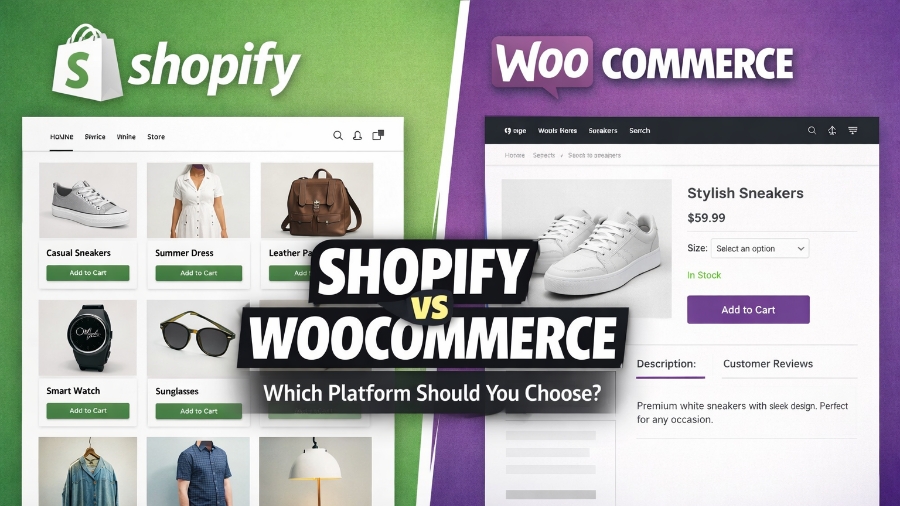
Choosing the right eCommerce platform plays a critical role in how well you can run your business online. Among the many options available, Shopify and WooCommerce remain two of the most popular choices for building and scaling online stores.
Both platforms power millions of websites worldwide, yet they are unique in their own ways, which can be difficult for beginners to understand. It is no wonder that people spend days and even weeks finalizing which platform they should use for their store.
If you are also one of those, then don’t worry, because this guide is made to tell you everything you need to know about Shopify and WooCommerce. We will talk about their features, benefits, pros, and cons, so that you can choose the right tool for your store.
What is Shopify
In simple terms, Shopify is a fully hosted eCommerce platform, which is designed to help people with little to no technical background create, manage, and scale an online store. It handles hosting, security, updates, and performance automatically, which allows business owners to focus on selling rather than managing the complexities that come with opening a store online.
Shopify also provides a clean dashboard where you can add products, manage inventory, process payments, and handle orders from a single place. One of Shopify’s biggest strengths is its simplicity. You don’t need coding knowledge to launch a store, which makes it ideal for the masses. Shopify also offers a large app ecosystem so that you can extend your store’s functionality.
It operates on a subscription-based model. Many individuals and businesses use Shopify for its reliability and ease of use, especially when scaling operations nationwide and globally.
What is WooCommerce
In simple terms, WooCommerce is an open-source eCommerce plugin that is built specifically for WordPress-based websites. Unlike Shopify, WooCommerce is not a standalone platform but a powerful extension that can single-handedly transform a normal WordPress site into a fully functional online store. It gives users complete ownership and control over their website, data, and customization options.
WooCommerce is popular among those who want flexibility. You can customize almost every part of your store, from design to checkout flow, using themes, plugins, and custom code. It supports physical products, digital goods, subscriptions, and even complex product variations. While WooCommerce itself is free, users must arrange hosting, security, backups, and performance optimization separately.
Shopify Features and Benefits
All-in-One Hosted Infrastructure
Shopify provides hosting, security, and platform maintenance under one subscription, which makes it convenient for business owners. This means you don’t have to worry about server management, software updates, or downtime issues. Everything runs on Shopify’s optimized infrastructure, which ensures fast loading speeds, stable performance, and strong security, even during high-traffic sales events.
Built-In Payment Processing
Shopify includes integrated payment options through Shopify Payments, which allows businesses to accept credit cards without third-party gateways. It also supports PayPal, Apple Pay, and other global payment methods, which makes it ideal for those who want to sell globally. This reduces setup time, simplifies checkout, and improves customer trust with a smooth, secure payment experience.
App Marketplace and Integrations
The Shopify App Store offers thousands of apps that can extend your store’s functionality. From email marketing and SEO tools to inventory automation and customer support, you can easily add features without hiring a professional programmer to do it for you manually. This flexibility helps stores adapt quickly as business needs change.
Multi-Channel Selling
Shopify enables selling products and services across multiple platforms from one dashboard. You can sell on Facebook, Instagram, TikTok, Amazon, and in physical retail stores using Shopify POS. With that inventory and orders stay synced, which makes multi-channel operations easy to manage.
Scalable for Growing Businesses
Shopify is designed to grow with your business. Whether you’re selling ten products or ten thousand, the platform handles traffic spikes and order volume smoothly. Subscribing to advanced plans can give you even more perks like support automation, reporting, and custom checkout features for large brands.
WooCommerce Features and Benefits
Complete Ownership and Control
WooCommerce gives users full ownership of their website and data. Unlike hosted platforms, you control hosting, design, and functionality. This is ideal for those businesses that want long-term independence and the ability to customize every aspect of their online store.
Deep Customization Options
Because WooCommerce runs on WordPress, customization is unlimited. You can modify themes, install plugins, or use custom code to make the store to your liking. This flexibility makes WooCommerce suitable for those who want a specific design and functionality.
Massive Plugin Ecosystem
The best thing about WooCommerce is that it benefits from WordPress’s extensive plugin library. Thousands of free and paid plugins are available for SEO, performance, security, marketing, and analytics. This allows you to tailor your WooCommerce store as you want with ease. .
SEO-Friendly Foundation
WordPress is known for its strong SEO capabilities, and WooCommerce builds on that, which is an added advantage. You can optimize URLs, metadata, content, and site structure easily. With the right plugins and strategies, WooCommerce stores can achieve strong organic search visibility.
Flexible Product Types
WooCommerce supports physical products, digital downloads, subscriptions, memberships, bookings, and more. This flexibility makes it a strong choice for businesses who offers or plan to offer diverse product types on varying pricing models.
Shopify Pros and Cons
Pros
Easy to Use for Beginners: Shopify’s interface is intuitive and beginner-friendly. You can set up a store, add products, and start selling with minimal to no programming knowledge, which makes it ideal for first-time store owners.
Reliable Performance and Security: Shopify handles hosting, SSL certificates, and security updates automatically. This reduces technical risks and ensures consistent performance, even during peak traffic periods.
Excellent Customer Support: Shopify offers 24/7 customer support through chat, email, and phone. This is important for businesses that need quick help without relying on third-party developers.
Fast Store Setup: With ready-made themes and built-in tools, Shopify allows you to launch your stores quickly. This speed is beneficial for those businesses that want to test products and marketing campaigns rapidly.
Strong Ecosystem: Shopify’s app store, themes, and integrations create a complete ecosystem that supports marketing, logistics, and growth without heavy customization.
Cons
Monthly Subscription Costs: Shopify operates on monthly plans, which can become expensive over time, especially when you plan to add paid apps or advanced features.
Transaction Fees: If you don’t use Shopify Payments, additional transaction fees will apply. This can increase overall costs for your business, which might be relying on third-party gateways.
Limited Customization: Compared to WooCommerce, Shopify has restrictions on deep customization. Advanced changes often require subscribing to higher-tier plans.
App Dependency: In Shopify, many essential features require paid apps, and relying on multiple apps can increase costs and impact the site’s overall performance.
Less Content Flexibility: Shopify is eCommerce-focused, which makes advanced content management and blogging less flexible than WordPress-based stores.
WooCommerce Pros and Cons
Pros
Full Ownership and Control: WooCommerce gives you complete control over your website, data, and store setup. You are not locked into a hosted platform, which means you can customize everything and move providers tailored to your business needs.
Unlimited Customization: With access to WordPress themes, plugins, and custom code, WooCommerce allows deep customization. This is ideal for businesses that have unique design needs or complex functionality that standard plugins cannot easily support.
Strong SEO Capabilities: Because WooCommerce is on WordPress, it is naturally SEO-friendly. You can fully control URLs, content structure, metadata, and technical SEO, which helps your to store to improve organic search visibility over time.
Flexible Cost Structure: WooCommerce itself is free to use. Businesses can start small and only pay for hosting, plugins (if paid), or features they actually need, which makes it flexible for those who are starting an online business with a limited budget.
Supports Complex Stores: WooCommerce handles advanced product types like subscriptions, memberships, and bookings, which makes it suitable for stores with complex pricing models.
Cons
Requires Technical Management: WooCommerce users must manage hosting, updates, backups, and security, all by themselves. This can be challenging for business owners with non-technical expertise and development support.
Performance Depends on Hosting: In WooCommerce, your store’s speed and stability depend heavily on your hosting provider. Poor hosting providers can lead to slow loading times and downtime issues, which can directly impact sales.
Setup Takes More Time: Compared to Shopify, WooCommerce takes longer to set up. On top of that, installing themes, plugins, and configuring settings requires more effort upfront.
Plugin Conflicts: In WooCommerce, using multiple plugins can sometimes cause compatibility issues. Not only that, but poorly maintained plugins can affect overall site performance and security if not managed carefully.
No Dedicated Support: WooCommerce does not offer centralized customer support. Help usually comes from hosting providers, developers, or community forums, which can slow issue resolution.
Shopify vs WooCommerce: Which One is Budget-Friendly?
When comparing costs, WooCommerce often appears more budget-friendly at the start because the core plugin is free. However, expenses such as hosting, premium themes, security tools, and paid plugins can add up over time. Shopify, on the other hand, has clear monthly pricing that includes hosting, security, and core features.
While Shopify plans may seem more expensive upfront, it offers predictable costs and fewer technical responsibilities. WooCommerce can be cheaper for users who manage their own hosting efficiently, but the cost can vary widely depending on setup choices.
In short, Shopify suits businesses that prefer a fixed pricing structure upfront, while WooCommerce works better for those who want flexible spending, tailored to business requirements.
Shopify vs WooCommerce: What’s Best for You?
While talking about Shopify vs WooCommerce, the best platform depends on your business goals, technical skills, and growth plans. Shopify is ideal for brands that want to launch quickly with minimal setup. It handles technical tasks automatically, which makes it ideal for business owners to focus on sales, marketing, and customer experience.
WooCommerce is better suited for those who want flexibility and control. If you already use WordPress and need custom features, WooCommerce provides that much-needed freedom that Shopify cannot fully match. It works well for content-heavy websites, niche stores, and businesses with specific design or functionality needs.
In short, if you prefer simplicity, predictable costs, and dedicated support, Shopify is the safer choice. If you value customization, ownership, and long-term scalability through WordPress, WooCommerce is the stronger option.
Conclusion
Shopify and WooCommerce are both excellent eCommerce platforms, but they serve different types of users, and understanding them is key for you to choosing the right platform for your store. It’s also worth noticing that there is no one-size-fits-all answer. Your decision should be based on your budget, technical comfort, and long-term goals. Above, we’ve shared all the core knowledge you need to make the right decision.
FAQ’s
- Is Shopify better than WooCommerce for beginners?
Yes, Shopify is easier for beginners because it handles hosting, security, and updates automatically.
- Can WooCommerce handle large online stores?
Yes, with proper hosting and optimization, WooCommerce can handle large online stores.
- Which platform is better for SEO?
WooCommerce generally offers more SEO flexibility because it runs on WordPress, which is highly SEO-friendly.
- Do I need coding skills for WooCommerce?
Basic stores can be built without coding, but advanced customization often requires technical knowledge and developer support.
- Which platform is cheaper in the long run?
It depends. WooCommerce can be cheaper with careful setup, while Shopify offers predictable monthly costs.