Now Reading: Midjourney vs DALL-E: Best AI Image Generator?
-
01
Midjourney vs DALL-E: Best AI Image Generator?

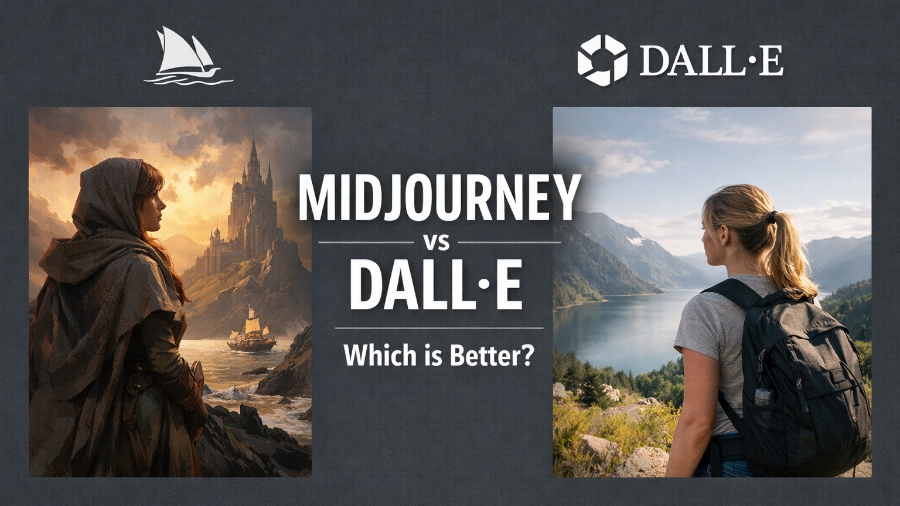
AI image generation has significantly changed how designers, marketers, and content creators produce visuals. Instead of relying only on stock photos and manual design, people now rely on AI image-generating tools like Midjourney and DALL·E, which can help create custom images using simple text prompts. No wonder these platforms are now widely used for blog graphics, social media, ads, and even on product mockups.
However, choosing between Midjourney and DALL·E can be challenging as both are unique in their own way. If you are also on those, then don’t worry, because in this guide, we will share with you everything you need to know about Midjourney and DALL-E, so that you can choose the right AI image-generating tool for your use.
What is Midjourney
In simple terms, Midjourney is an AI image generator that can create images from text prompts using advanced machine learning models. It can create a range of different visuals, including artistic and cinematic. Unlike other AI image-generating tools, Midjourney is a bit different as it primarily works through Discord, where you can type prompts and receive AI images in seconds.
The tool is popular among digital artists, designers, and marketers who want visually striking images without manual illustration. It’s also worth noticing that Midjourney primarily focuses more on creative interpretation than strict realism, which often leads to imaginative and expressive outputs.
What is DALL·E
DALL·E is an AI image generation tool which is developed by OpenAI that can create images from text prompts. It is best designed to help you get images that look real, tailored to your intent. DALL·E is accessible through a web interface and can also be integrated into different platforms like ChatGPT, which makes it easier for everyone to use.
One of DALL·E’s biggest strengths is its ability to understand detailed prompts and produce realistic, context-aware images. It also offers image editing features like inpainting, which can be a key part to help you modify specific parts of an image without starting from scratch over time.
Its realism is one of the reasons why DALL·E is widely used by marketers, educators, product teams, and content creators who need clear, reliable visuals.
Benefits and Best Things About Midjourney
Artistic and Cinematic Image Quality
Midjourney is widely appreciated for its artistic output. The images you get, with the right prompt on Midjourney, often feel cinematic, dramatic, and visually rich, which specially make them ideal for creative projects. It also excels at generating mood-based visuals, fantasy scenes, and stylized compositions that can help you stand out from the rest.
Instead of producing generic images, it adds depth, lighting, and in-depth texture details so that the image looks like professional digital art.
Strong Creative Interpretation of Prompts
Midjourney does not just follow prompts mechanically, but understands them creatively. It’s one of the reasons why even simple prompts can help you get complex and imaginative visuals. This strength makes it useful for brainstorming ideas and exploring different visual directions without needing detailed instructions.
Designers often use Midjourney to generate inspiration rather than a final result, which saves a lot of their time and also helps them get the right idea to push through.
High Customization Through Prompt Parameters
Midjourney allows you to control image output using parameters like aspect ratio, stylization level, chaos, and version settings. These controls can help you fine-tune how literal and artistic you want the results to be. On top of that, advanced users can also experiment with different combinations to achieve specific looks. This high level of control gives you more creative freedom compared to other simpler AI image tools.
Ideal for Concept Art and Visual Storytelling
Midjourney is heavily used in concept art and storytelling projects. It can help you generate scenes, characters, and environments that feel real with actual emotions inside. It is no wonder that many writers, game designers, and filmmakers often use it to visualize their raw ideas before they go into production.
Active Community and Rapid Innovation
Midjourney has a large and active user community, which is primarily active on Discord. Nowadays, many experienced Users share prompts and valuable techniques, which can help beginners to learn and adapt to Midjourney’s environment faster.
The platform also updates its models frequently, which, over time, can improve image quality and prompt handling. This fast-paced development keeps Midjourney competitive and aligned with creative trends.
Benefits and Best Things About DALL·E
Accurate Understanding of Text Prompts
DALL·E is best known for its strong prompt comprehension. It’s created images closely match the described details. This makes it reliable for those who need specific elements, objects, and layouts in their images. Unlike more abstract tools, DALL·E prioritizes clarity and correctness, which makes it helpful for those who need visual accuracy.
Easy-to-Use Interface for Beginners
DALL·E came up with a simple and clean user interface that does not require technical knowledge to understand. You can generate images directly from a web platform or within ChatGPT. There is no requirement to learn complex commands or join external platforms. This ease of use makes DALL·E accessible to beginners, including non-designers.
Built-In Image Editing and Inpainting
One of DALL·E’s standout features is image editing. You can select parts of an image and modify them without generating a new image from scratch. This is useful for correcting small details, like changing backgrounds and slightly adjusting objects. Overall, inpainting saves time and provides more control over final images.
Suitable for Professional and Commercial Use
DALL·E is commonly used for business-related content like blog images, presentations, ads, and product visuals. The images DALL-E generates are generally clean, clear, and suitable to be used commercially. This makes DALL·E a preferred choice for companies that need consistent visuals and don’t have the services of professional designers.
Strong Integration with AI Workflows
DALL·E integrates smoothly with AI-driven workflows, especially when used inside ChatGPT. You can refine prompts, request variations, and even adjust images in a conversational way. This integration significantly improves productivity and reduces friction between ideation and execution.
Pros and Cons of Midjourney
Pros
Exceptional Visual Depth and Style: Midjourney produces images with in-depth visuals and lighting, which makes each image unique in its own. This strength is evident in illustrations, dramatic scenes, and artistic compositions, where a lack of in-depth detail can reduce the image’s overall impact.
Strong Results with Short Prompts: Midjourney can generate impressive visuals even from short, non-descriptive prompts. You do not always need long and complex descriptions to get the type of image you want. This makes it useful for quick experimentation and idea generation.
Flexible Image Variations: Midjourney allows you to generate multiple variations from a single image. This can help you compare different visual directions without rewriting prompts every time. It is key for designers who can quickly explore a range of different alternatives and select the best option.
Consistent Artistic Identity: Images generated by Midjourney often share a consistent artistic tone. This can help maintain visual identity across different projects. Brands and creators who are aiming for a specific aesthetic can greatly benefit from this consistency.
Frequent Model Improvements: Midjourney regularly updates its models, which can help improve image quality and the model’s overall prompt handling. These updates keep the tool competitive and aligned with user expectations.
Cons
Limited Precision and Accuracy: Midjourney prioritizes creativity over accuracy. This can be a slight drawback for those who need the exact visual details they need. Objects, text, and even layouts may not always match the prompt perfectly.
Dependency on Discord Interface: Midjourney operates mainly through Discord, which may not suit everyone. It is one of the reasons why beginners can find the interface confusing at first. Not only that, but managing the prompts inside the chat channels can also feel cluttered compared to other AI image-generating tools.
No Native Image Editing Tools: Midjourney does not come up with a built-in editing or inpainting feature. That’s why, if you didn’t like even a single element of the image, you have to regenerate it entirely to make changes. This can be inefficient when only small adjustments are needed.
Too Abstract for Business Graphics: For professional visuals like product images and instructional graphics, Midjourney may be counted as good, but not the best. Because sometimes, if the prompt lacks anything, the artistic style can feel too abstract for commercial use.
Subscription-Based Access: Midjourney requires a paid subscription for continued use. There is no long-term free access option, which may be a limitation for casual users and small teams with a tight budget.
Pros and Cons of DALL·E
Pros
High Prompt Accuracy: DALL·E focuses mainly on following instructions closely. In most cases, the generated images will exactly match the prompt details you have shared accurately. This makes it reliable for those who need specific visual elements and styles.
Simple and Accessible Platform: DALL·E is easy to access through a web interface and from other AI tools like ChatGPT. You can start generating images immediately without any prior setup. This simplicity makes it suitable for ease of use.
Built-In Editing Capabilities: DALL·E supports image editing and inpainting, which you won’t find in Midjourney. You can modify specific areas of an image without starting from zero. This can improve the overall efficiency and control you have over the image.
Suitable for Informational Content: DALL·E generates clean and clear images, which makes it ideal to be used in commercial spaces like blogs, presentations, and educational materials.
Strong AI Ecosystem Integration: DALL·E integrates smoothly with AI-driven workflows. You can refine prompts conversationally, which overall improves productivity and makes the creative process smoother.
Cons
Less Artistic Output: Compared to Midjourney, DALL·E images can feel less expressive, emotionally, and artistically. DALLE-E’s visuals often prioritize clarity over creativity. That’s why it may not suit those who are looking for dramatic and high-quality artistic results.
Limited Style Variety: DALL·E offers fewer stylistic variations. While the images it will create will look accurate, they can often appear similar across different prompts, which can limit creativity.
Prompt Sensitivity: DALL·E requires precise wording with styling requirements to come up with an effective image. Even small changes in the prompt can significantly affect results. That’s why you might need to experiment a lot to get your desired outcome.
Fewer Advanced Controls: DALL·E does not offer advanced parameter controls like stylization and chaos levels. It means that you are going to have less control over artistic direction, which can limit customization.
Conclusion
Midjourney and DALL·E serve different purposes in AI image generation. While Midjourney excels in creativity, artistic depth, and visual storytelling, it often sacrifices precision and ease of use. DALL·E, on the other hand, focuses on accuracy, usability, and professional output.
At last, keep in mind that there is no one-size-fits-all solution, and choosing the right AI tool depends entirely on your goals. Above, we’ve shared all the necessary information that can help you do just that.
FAQ’s
- Is Midjourney better than DALL·E?
It depends on your needs. Midjourney is better for artistic visuals, while DALL·E is better for creating more accurate images.
- Which tool is easier for beginners?
DALL·E is often considered easier because of its simple interface.
- Can Midjourney edit images?
No, Midjourney does not support image editing and inpainting.
- Is DALL·E suitable for commercial projects?
Yes, DALL·E is considered suitable for commercial projects.
- Which AI image generator is better in 2026?
Both are strong in 2026, but as mentioned above, choosing the right tool depends on your goal.